


Insights
After the EU Right to Repair Directive Takes Effect: How Should Companies Choose the Right Repair Management Tool to Turn Regulatory Pressure into an After-Sales Service Advantage?
2026-09-18 09:26:41
In the previous article, we broke down the structural impact of Directive (EU) 2024/1799 on product scope, spare parts supply periods, warranty extension logic, and information disclosure obligations. This article turns to what companies actually need to do: as the rules take effect across the EU simultaneously from July 31, 2026, what sequence should companies follow to comply? What requirements does the European online platform for repair impose? What functions should be evaluated when assessing a repair management system? What advantages come from choosing the right tool? The article closes with how the wareconn platform can help companies navigate this transition.
1. Corporate Response Strategy for After-Sales Service: From Compliance Checklist to Governance Framework
When most companies first read the Right to Repair Directive, their instinctive reaction is to treat it as a "to-do list" — confirm product scope, stock up on parts, post a notice page online, and consider the job done once completed. But the Directive's requirements actually follow a clear judgment logic and sequence.
1.1 Determining Whether a Repair Obligation Applies | ||||
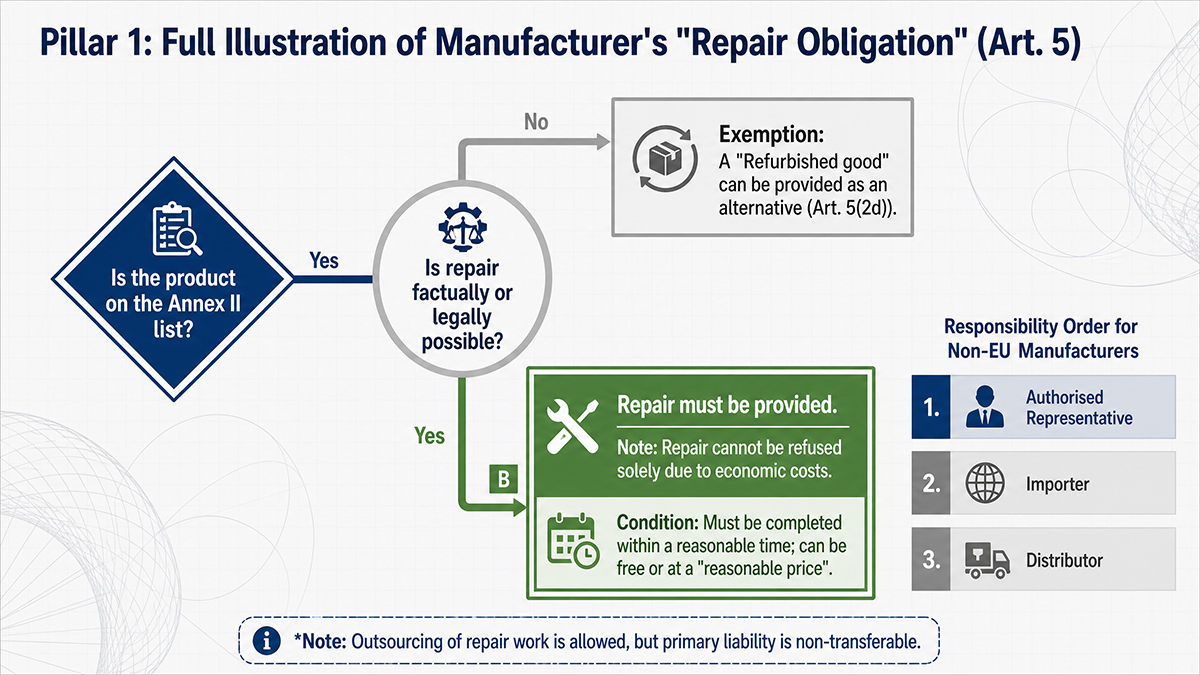
Article 5 of the Directive establishes a three-node decision logic: Does the product fall under Annex II? Did the defect occur outside the warranty period? Is repair physically or legally impossible? As long as it is not "impossible," the company triggers an absolute repair obligation and cannot refuse on grounds of cost or because the product has "already been repaired by someone else." Companies need to translate this logic into an operational process to ensure consistent judgment standards. | ||||
Figure 1: Article 5 Repair Obligation Decision Logic (Three-Node Decision Tree, Art. 5) | ||||
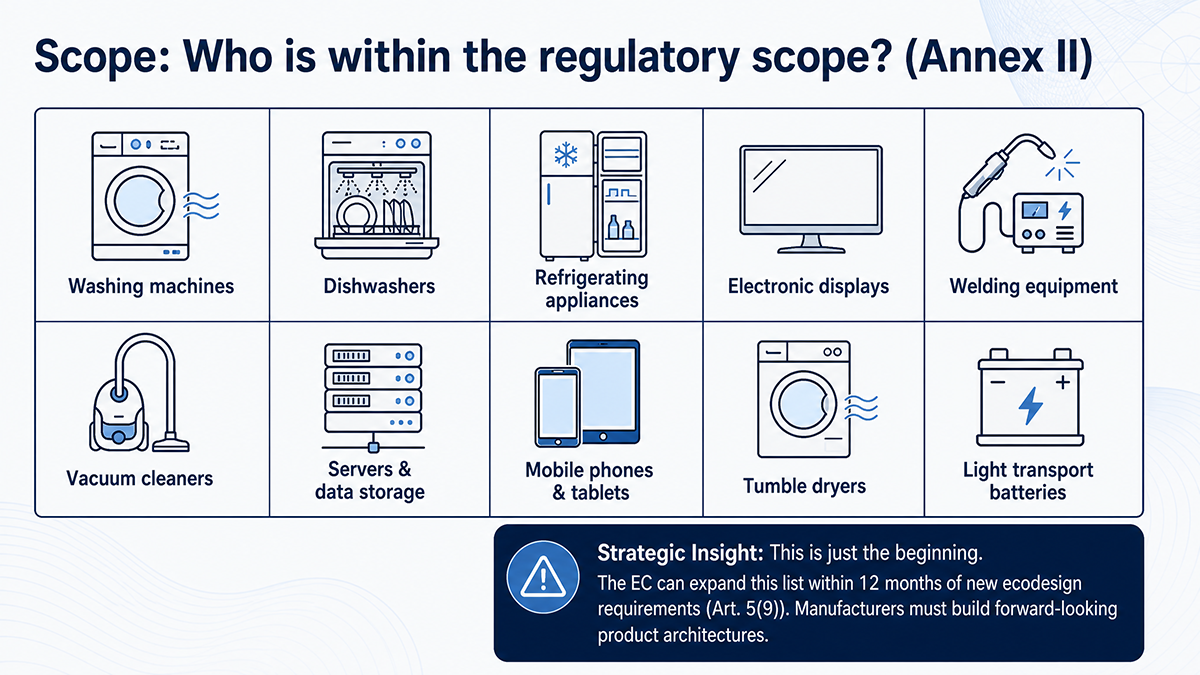
Annex II covers a wide range of product categories, and the European Commission may expand the list within 12 months after new ecodesign requirements are published, so companies need forward-looking planning. The full list is shown below: | ||||
Figure 2: Directive (EU) 2024/1799 — Annex II Scope of Applicable Products | ||||
1.2 Clarifying Responsibility Allocation Along the Supply Chain | ||||
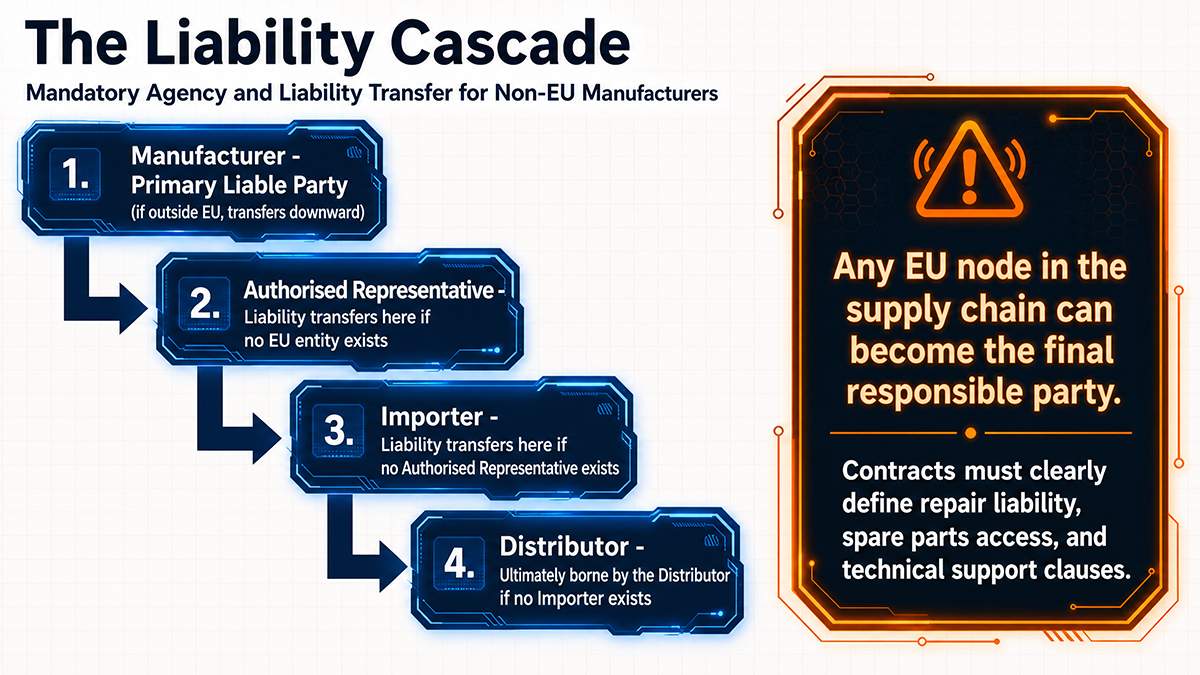
The Directive is designed around a "liability cascade mechanism": the obligation rests in principle with the manufacturer, and if the manufacturer is located outside the EU, it shifts in sequence to the authorized representative, importer, and distributor. For companies selling through agents, the contract must clearly define repair responsibility and access to spare parts; repair work itself can be outsourced, but the underlying liability cannot be transferred. | ||||
Figure 3: Liability Cascade Mechanism for Non-EU Manufacturers (The Liability Cascade) | ||||
1.3 Spare Parts Pricing and System Process Setup | ||||
Companies must ensure spare parts inventory and supply periods meet the Directive's minimum requirements, and establish a "reasonable price" logic that covers labor cost, parts cost, repair facility operating cost, and reasonable profit — pricing must not indirectly obstruct repair; ancillary service fees such as shipping must be disclosed separately in the quote. Diagnostic fees may be charged, but if the consumer chooses to proceed with the repair, the repairer must deduct this fee from the total price; the Directive also encourages providing a temporary replacement during the repair period. | ||||
1.4 External Disclosure, Governance, and Recordkeeping Obligations | ||||
Before the Directive's effective date, companies must publicly disclose four categories of compliance elements on their websites: the list of Annex II product models, an indicative price list for common faults, an explanation of repair channels, and information compliant with the Accessibility Act. In addition, companies must retain a complete record of every repair request for audit purposes; the Directive authorizes consumer protection and environmental groups to bring collective actions against non-compliant companies, and each Member State must establish penalties and report them to the Commission. |
2. Requirements of the European Online Platform for Repair: The External Node Companies Must Connect To
Beyond internal regulatory actions, Article 7 of the Directive also establishes an external information infrastructure for the EU: the European online platform for repair, expected to launch in 2027, serving as a national-level matching facility.
2.1 Platform Positioning and Participant Roles | ||||
The platform lets consumers search by geographic location and product category, completely free of charge. Its scope of roles is broader than "authorized repair centers," covering professional repairers, second-hand refurbishers, buyers of defective goods, and community repair initiatives; the scope may also expand in the future to include the sale of refurbished goods, so system design cannot focus solely on one-off repair cases. Registration is voluntary, but it directly affects whether a company can be found by consumers. | ||||
2.2 The Legal Effect of the One-Click Quote and the 30-Day Lock-in Period | ||||
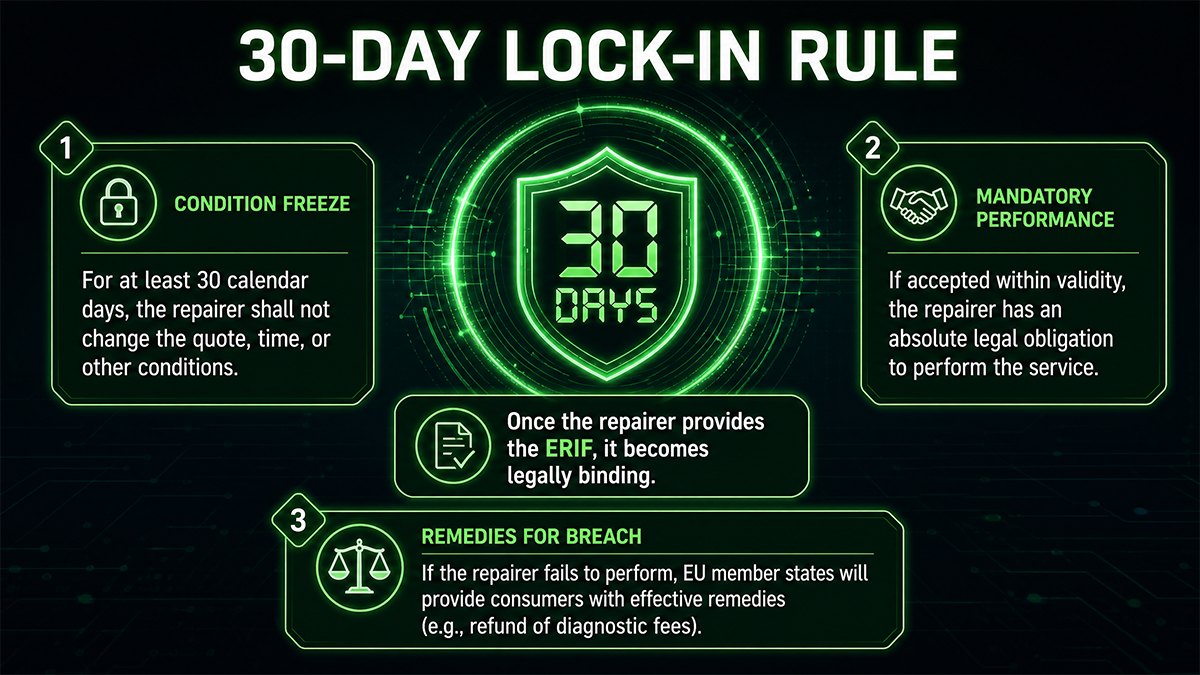
The platform includes a built-in one-click function for requesting a European Repair Information Form (ERIF) from a repairer. Once a quote is provided, the 30-day lock-in period takes effect immediately; once the consumer accepts, the repairer has an absolute obligation to perform, and each Member State must provide effective remedies if performance fails. | ||||
Figure 4: The 30-Day Lock-in Rule | ||||
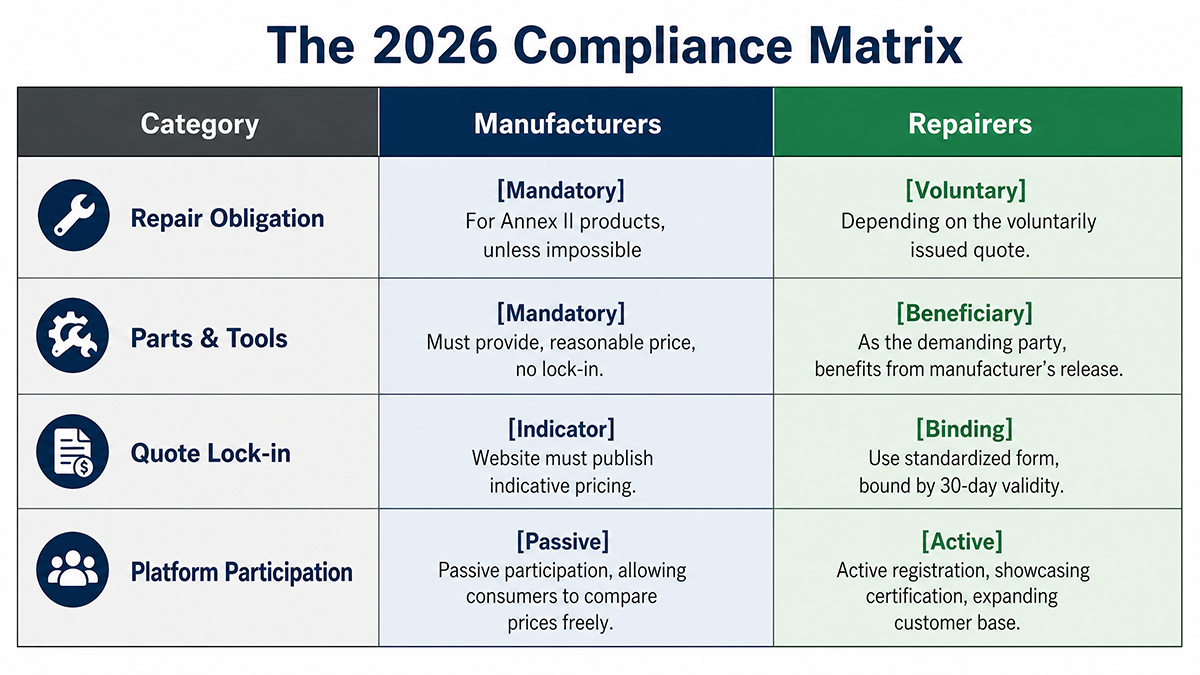
The division of responsibilities between manufacturers and repairers can be summarized in the table below: | ||||
Table 1: Division of Responsibilities Between Manufacturers and Repairers Under the "European Online Platform for Repair" Framework | ||||
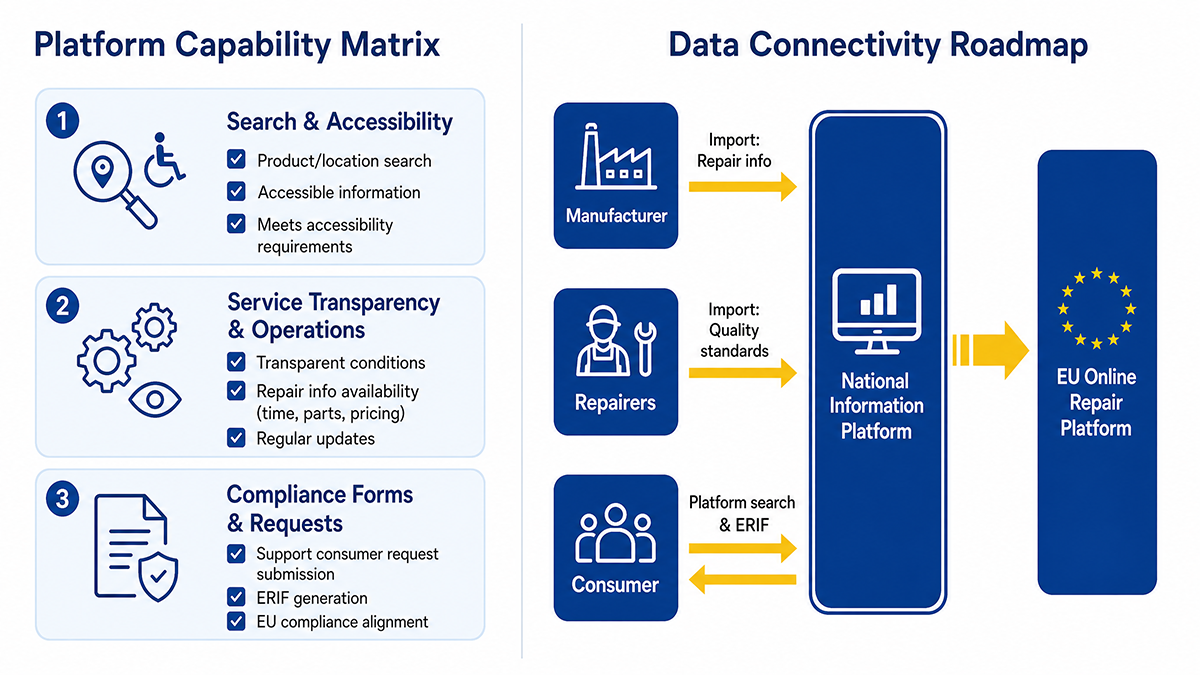
2.3 Data Integration Architecture | ||||
Regardless of how the roles covered by the platform expand, fulfilling the repair obligation ultimately relies on the same cross-role data architecture: data from manufacturers, repair technicians, and consumers must all feed into the same cross-Member-State platform architecture, as shown below: | ||||
Figure 5: How Data from Manufacturers, Repair Technicians, and Consumers Flows into National and European Online Repair Platforms |
3. Essential Functions of an R2R Repair Platform: From Compliance Baseline to Auditable Operating System
A platform that truly meets the requirements of the R2R Directive needs, at minimum, the following core functions:
➤ | Repair obligation determination, liability tracking, and standardized quoting: | |||
The system must have a built-in three-node decision logic that automatically checks Annex II scope, warranty status, and repairability, while also recording who bears responsibility. Once a case is established, the system must generate a structured quote in ERIF format, automatically track the 30-day lock-in deadline, and apply the "total cost minus diagnostic fee equals final cost" deduction calculation. | ||||
➤ | Warranty extension and spare parts supply management: | |||
Once a consumer opts for repair, the warranty is automatically extended by at least 12 months; the system must automatically determine the start and expiry dates and ensure frontline staff proactively inform the consumer of this right. The repair platform must connect in real time with the spare parts system to reflect inventory, supply periods, and arrival times. | ||||
➤ | Audit trail, cross-system integration, and external information disclosure: | |||
The complete timeline and change history of a case, from intake to closure, must be retained as a basis for defending against litigation; the system must be able to exchange data with ERP, CRM, and warranty systems, and have the capability to connect with the European online platform for repair. | ||||
4. The Advantages of Choosing the Right Repair Management Platform
4.1 Real Operational Benefits | ||||
➤ | Reduced compliance risk and audit cost: Records are kept centrally and can be quickly retrieved as evidence during audits. | |||
➤ | Breaking down departmental information silos: Customer service, supply chain, and legal teams collaborate on the same data. | |||
➤ | Improved spare parts supply chain forecasting: Repair requests and inventory are integrated to optimize procurement timing. | |||
➤ | Flexibility for cross-border expansion: Standardized output capability lets companies adjust parameters to meet each Member State's integration requirements. | |||
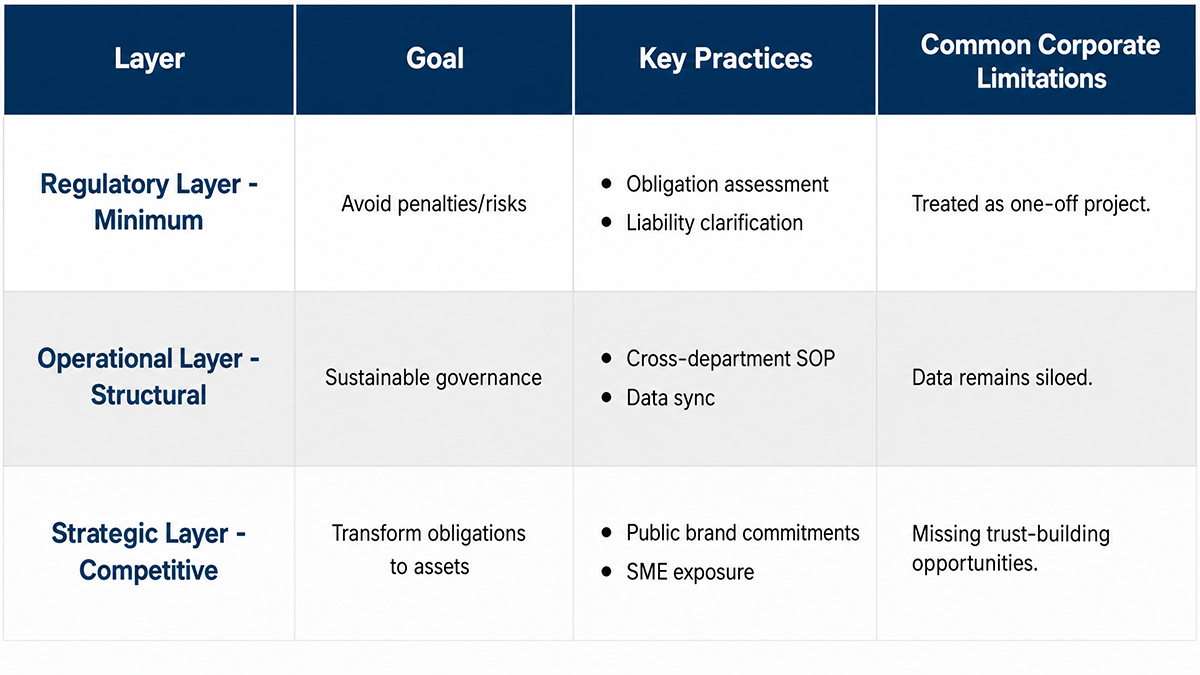
4.2 Three Dimensions of Response for After-Sales Service: Regulatory, Operational, and Strategic | ||||
The Directive addresses four structural gaps: information opacity, broken spare-parts supply chains, technical barriers, and the lack of cross-border accountability. Companies' response is to move after-sales service from the regulatory level up through the operational level to the strategic level: | ||||
Table 2: Comparison of the Three Levels of Response Thinking | ||||
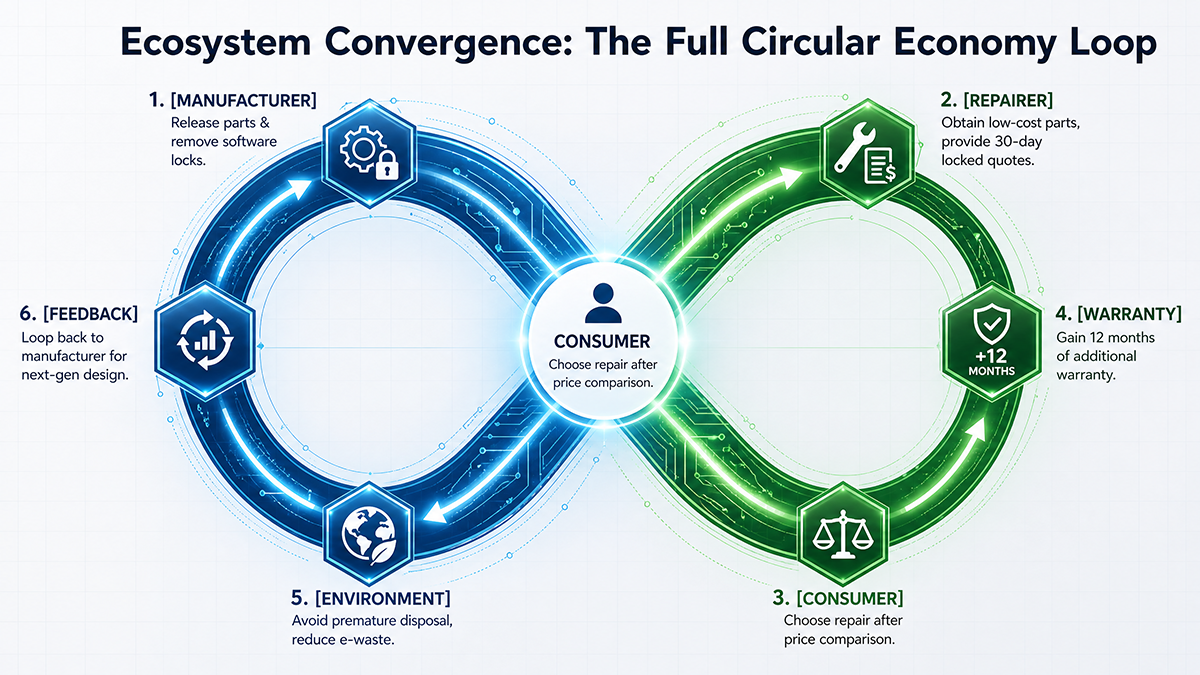
4.3 A Complete Closed Loop for the Circular Economy | ||||
Once these three levels are linked together, the originally passive compliance obligation of the Right to Repair Directive forms a complete circular-economy loop together with the Ecodesign for Sustainable Products Regulation (ESPR) and the Consumer Empowerment Directive, connecting product design, after-sales repair, and second-hand refurbishment. The tool that can support this loop and turn the abstract vision of a circular economy into everyday operations is the repair management tool a company chooses to adopt. | ||||
Figure 6: Ecosystem Integration — The Complete Closed Loop of the Circular Economy | ||||
5. How wareconn Helps Companies Respond to R2R
5.1 A Data Integration Architecture Spanning Manufacturers and Repair Centers | ||||
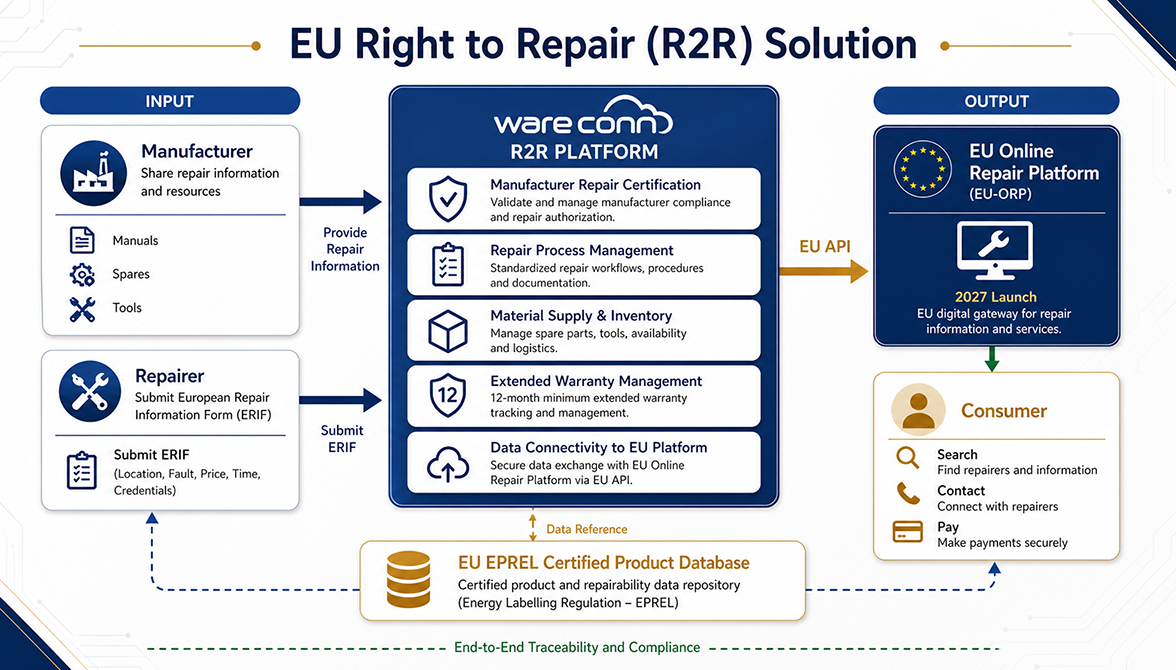
wareconn's role is to bring together data from both manufacturers and repairers, standardize it, and then connect via the EU API to the European online platform for repair and the EU product database. | ||||
Figure 7: Architecture of the EU Right to Repair (R2R) Platform Solution | ||||
5.2 The Compliance Difference wareconn Makes | ||||
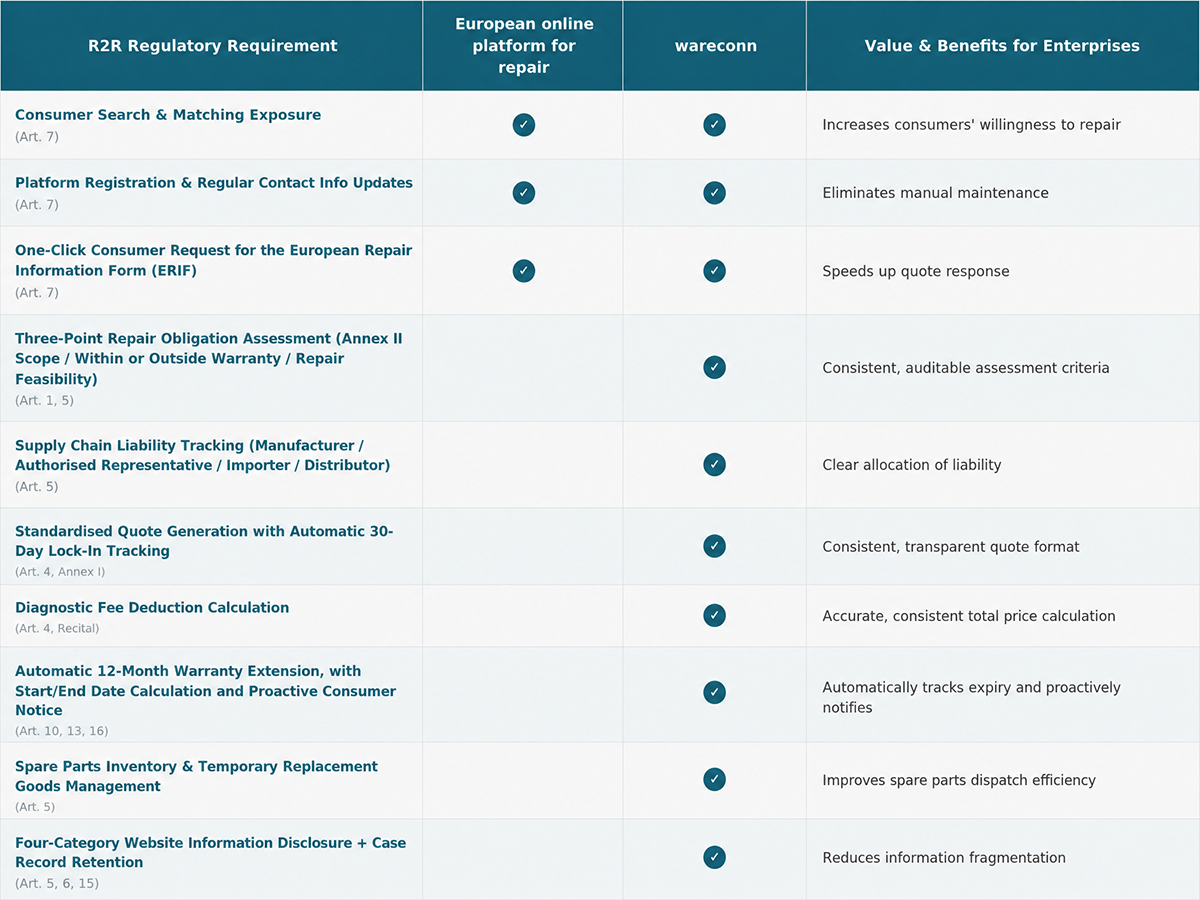
If a company only completes registration on the European online platform for repair, most compliance actions still need to be carried out manually — tracking quote deadlines by hand, updating warranty periods manually, managing spare parts in a fragmented way. Only after connecting wareconn does this work become truly systematized. | ||||
Table 3: EU Online Repair Platform vs. wareconn | ||||
What Table 3 actually compares is two roles of a different nature, not a matter of which function is better. The European online platform for repair is a consumer-facing matching service, while wareconn is a company-facing operating system. The first three checked items in the table belong to the platform's statutory functions, available to companies once registered; the remaining seven are capabilities companies must have on their own to fulfill their R2R obligations — the platform is positioned as a consumer matching gateway and was never meant to cover these internal company operations. Without system support, this work is typically still handled manually across Excel, email, phone calls, and other scattered tools. What wareconn does is not replace the platform, but integrate these seven obligations that belong to the company into a single online system that connects with the platform, so companies don't need to cobble together multiple additional tools outside the platform. | ||||
From quoting, warranty, and spare parts to information disclosure, what wareconn solves is not "whether there's a platform entry point," but "whether this data should keep being scattered across manual work and multiple systems." Without system integration, even a company that has completed platform registration can still end up in substantive non-compliance due to quote disputes, warranty calculation errors, or spare parts shortages. | ||||
5.3 Manufacturer Side: From Data Upload to Platform Sync | ||||
For manufacturers, what wareconn addresses is not "one more system to maintain," but consolidating data that was originally scattered across PLM, customer service, and legal teams into a single traceable workflow: | ||||
➤ | Product and spare parts data upload: Upload the product list, Annex II determination, spare parts inventory, and supply periods in one go. | |||
➤ | Automatic EPREL data matching: Automatically match against existing registration data by model number, without duplicate entry. | |||
➤ | Automatic generation of compliance documents: Automatically generate statutory disclosure content in Annex I format. | |||
➤ | Synchronized publishing after review: Once reviewed and confirmed, automatically sync to the company website and the European platform. | |||
5.4 Repair Center Side: Filling Out and Submitting the ERIF Form | ||||
For repair centers, the most time-consuming part of filling out the European Repair Information Form (ERIF) is usually not the quote itself, but repeatedly confirming basic product data. wareconn splits this process into two parts: what the system already knows is auto-populated, and what the repair center needs to judge on-site is left to manual input: | ||||
➤ | Case intake with auto-populated data: Automatically pull up model number, warranty status, and spare parts information by serial number. | |||
➤ | On-site information input: Just fill in the diagnostic result, quote breakdown, and estimated time. | |||
➤ | System assembly and time-limit rules applied: Automatically compiled into an ERIF with the 30-day lock-in period applied. | |||
➤ | One-click submission with record retention: Fully retained after submission for audit retrieval. | |||
5.5 Additional Advantages Beyond Compliance | ||||
Beyond closing regulatory gaps, adopting wareconn can also bring companies the following competitive advantages: | ||||
➤ | Automatic information sync and real-time response: The system automatically generates data with no manual maintenance needed. | |||
➤ | Significantly reduced audit and litigation risk: Records can be checked instantly, with no need to scramble for evidence. | |||
➤ | Consumer trust and brand equity: Transparent pricing becomes a brand commitment. | |||
➤ | Cross-border expansion with no extra rework: Parameter adjustments alone can meet each Member State's integration requirements. | |||
6. Conclusion
The EU Right to Repair Directive is not a one-off compliance project — it is a fundamental shift in the logic of after-sales service governance. As of July 31, 2026, it is now formally and fully in effect. If companies continue to treat it merely as "adding a disclosure page" or "opening an extra repair request form," they will find themselves perpetually playing catch-up as Annex II keeps expanding and Member State platforms come online one after another. Conversely, if companies integrate decision logic, responsibility allocation, quote timelines, warranty extension, and audit records into a single system, this compliance work can be turned into a strategic asset that reduces risk, improves efficiency, and builds trust.
Author
Wareconn Editorial Department

After the EU Right to Repair Directive Takes Effect: How Should Companies Choose the Right Repair Management Tool to Turn Regulatory Pressure into an After-Sales Service Advantage?.pdf
Reference
- Directive (EU) 2024/1799
- Directive (EU) 2020/1828
- Right to repair - European Parliament
- ScienceDirect - Perspectives from the broken electronics repair system: Barriers and enablers along the repair journey
- SSRN eLibrary - Claiming the EU Right to Repair from Manufacturers in Cross-Border Contexts
- Claimlane - EU Right to Repair: What Brands Must Know (2026)
- Journal of Circular Economy (2025) 3:3, 274-295 - Repair Over Replacement: Consumer Behaviours and Repair Practices for Electronics in the Global South
- JITTC - The right-to-repair movement: Sustainability and consumer rights
- Intelligent Living - EU Right to Repair Goes Live July 31, 2026: How Warranty Extensions, Repair Quotes, and Spare Parts Turn Fixing into the Default
- complyMarket - EU Right to Repair Rules: Practical Compliance Guide